
Retaining wall repair, replacement and installation in Worcester, MARequest an estimate
Worcester planning guide

Signs a Retaining Wall Is Failing

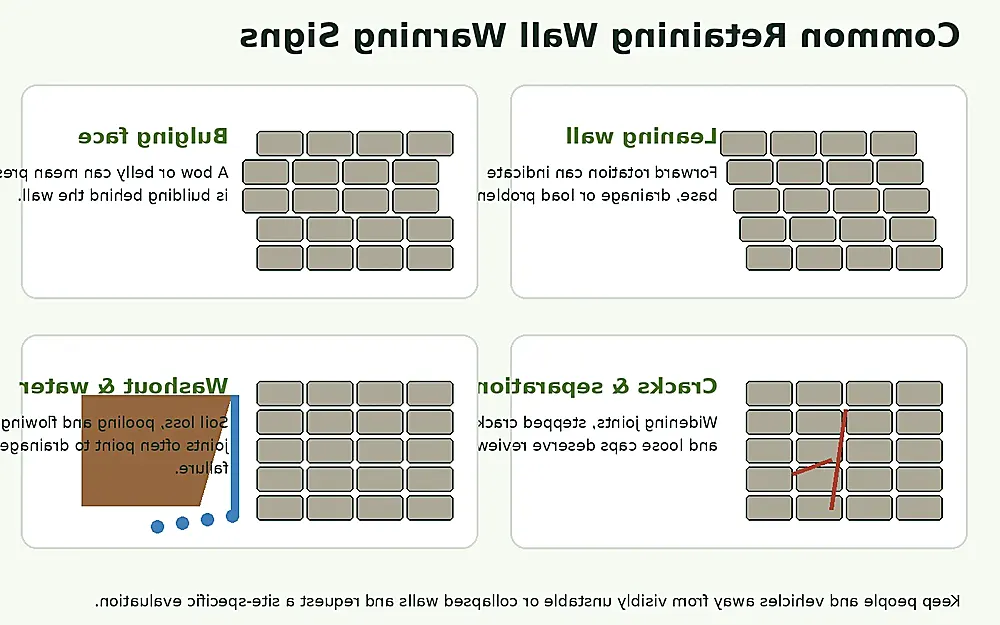
Retaining-wall failure is rarely one crack in isolation. Look for patterns: movement of the face, loss of soil, water, changes at the top and settlement in connected pavement or stairs.

Photograph the same locations with dates and a reference point. Do not rely on monitoring if the wall threatens a walkway, driveway, building or occupied area.

Key points to review

  • Forward lean or rotation
  • Bulging between corners or reinforcement points
  • Stepped, widening or repeating cracks
  • Separated caps, corners and stair connections
  • Soil loss through joints or around wall ends
  • Standing water or concentrated flow
  • Rotten timbers and exposed anchors
  • Settlement above the wall
  • Fallen units or an exposed soil face
  • New movement after heavy rain or winter
Retaining wall planning illustration

How to use this information

Walk the full length of the wall from a safe location. Photograph the wall face, both ends, the area above it and any drainage outlets. Note the highest exposed point, what the wall supports and whether the condition changes after rain or winter. This creates a more useful starting point for contractors and design professionals.

Official resources: Review the City of Worcester building and zoning guidance and the Massachusetts Dig Safe guide before excavation.

Questions homeowners ask

Can I use this guide instead of a site evaluation?

No. The guide helps you document conditions and ask better questions, but hidden base, soil and drainage conditions usually require an on-site review.

What should I send with an estimate request?

Include wide photos, close-ups, approximate length and height, the property address, access information and what sits above the wall.

Should I get multiple quotes?

Yes. Compare scope, materials, drainage, exclusions and responsible provider details, not only total price.

When should an engineer be involved?

Consider engineering when the wall is tall, supports vehicles or structures, sits on a difficult slope or shows movement that is not readily explained.

Related guides and services

Create a useful condition record

How to document retaining wall changes before requesting service

Take photographs from the same fixed locations over time. Include a straight reference such as a building corner, level pavement edge or temporary plumb line when it can be done safely. Date the images and note recent rain, snowmelt or construction nearby.

Measure cracks and gaps without standing below unstable material. Note whether caps are separating, pavement is settling or soil is pulling away at the top. Water stains and washout can disappear between storms, so photograph them when observed.

Do not excavate around the base or remove soil above a moving wall simply to investigate. That can reduce support. When movement is rapid, soil is cracking or the wall threatens an occupied area, keep clear and seek prompt professional guidance.

  • New or increasing lean
  • Widening or offset cracks
  • Separated courses, caps or wall ends
  • Soil loss and voids behind the wall
  • Water, staining or blocked outlets
  • Movement in pavement, stairs, fences or nearby ground

Tell us what is happening with your wall.

Upload a few photos, the property address and an approximate size. We will use those details to route the request and follow up about the next step.

Request a Free Estimate
Free Estimate