
The most important question is whether the repaired wall will still rely on failed hidden components. A face patch may be inexpensive today but poor value if the base, backfill and drainage remain unchanged.
Key points to review
- Repair may fit when movement is localized
- Rebuilding may fit when face material is reusable but the base failed
- Replacement may fit when material and foundation are deteriorated throughout
- Engineering may be needed where walls carry major loads
- Drainage correction should be included whenever water contributed
- Compare expected service life, disruption and warranty scope
How to use this information
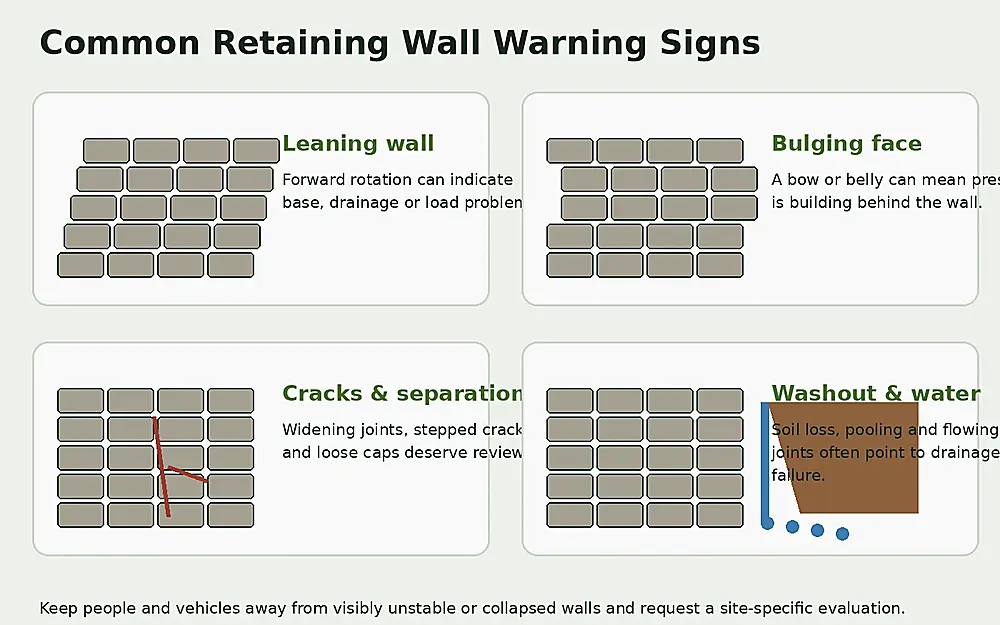
Walk the full length of the wall from a safe location. Photograph the wall face, both ends, the area above it and any drainage outlets. Note the highest exposed point, what the wall supports and whether the condition changes after rain or winter. This creates a more useful starting point for contractors and design professionals.
Questions homeowners ask
Can I use this guide instead of a site evaluation?
No. The guide helps you document conditions and ask better questions, but hidden base, soil and drainage conditions usually require an on-site review.
What should I send with an estimate request?
Include wide photos, close-ups, approximate length and height, the property address, access information and what sits above the wall.
Should I get multiple quotes?
Yes. Compare scope, materials, drainage, exclusions and responsible provider details, not only total price.
When should an engineer be involved?
Consider engineering when the wall is tall, supports vehicles or structures, sits on a difficult slope or shows movement that is not readily explained.